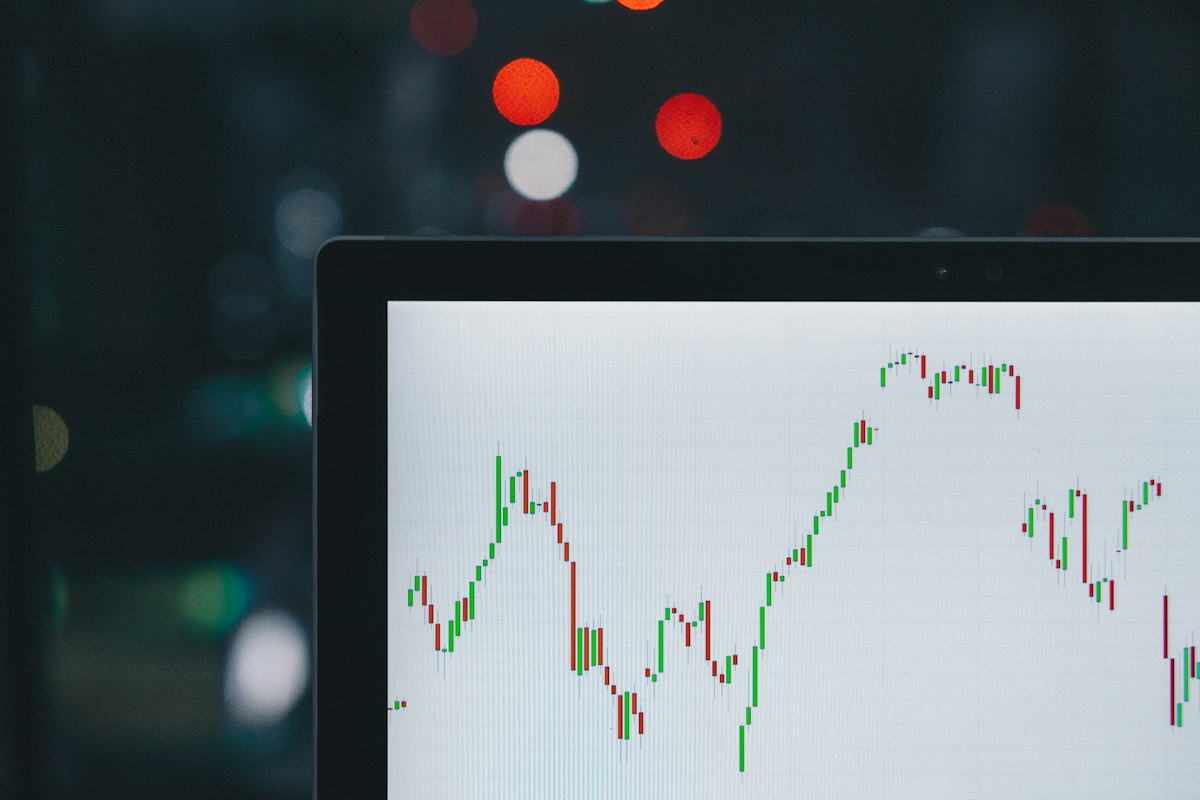
Every Chart Tells a Story
When a beginner looks at a forex chart, they see a mess of green and red candles going up and down randomly. When a professional trader looks at the same chart, they see a story: who's in control (buyers or sellers), where the key battlegrounds are (support and resistance), what's likely to happen next (continuation or reversal), and where to get in if they want to trade it.
The difference isn't talent. It's training. Anyone can learn to read charts — it just takes structured practice and the right framework.
Step 1: Understand Candlesticks
Most forex charts use Japanese candlesticks. Each candle represents a period of time (1 minute, 1 hour, 1 day — depending on your timeframe) and shows four pieces of information:
Open: Where the price started at the beginning of the period.
Close: Where the price ended.
High: The highest point reached during the period.
Low: The lowest point reached.
If the close is higher than the open, the candle is typically green (or white) — this is a bullish candle, meaning buyers were in control. If the close is lower than the open, the candle is red (or black) — bearish, sellers won.
The "body" is the thick part between open and close. The "wicks" (thin lines above and below) show how far price went before being pushed back. Long wicks tell you there was a fight. Short wicks mean one side dominated.
A few patterns to learn first: Doji (tiny body, long wicks — indecision), Engulfing (a big candle that completely covers the previous one — strong momentum), and Hammer/Shooting Star (long wick on one side, small body — potential reversal).
Step 2: Identify Support and Resistance
Support is a price level where the market has bounced upward before — think of it as a floor. Resistance is a level where the market has been pushed back down — a ceiling.
To find these levels, zoom out on your chart and look for prices where candles have reversed direction multiple times. The more times a level has been tested, the stronger it is.
Here's the key insight most beginners miss: support and resistance are not exact prices — they're zones. Don't draw a line at 1.0852 and expect price to bounce to the pip. Think of it as a zone between 1.0840 and 1.0860.
When price breaks through a resistance level, that old resistance often becomes new support (and vice versa). This "role reversal" is one of the most reliable concepts in technical analysis.
Step 3: Determine the Trend
Is the market going up, going down, or going sideways? This sounds simple, but many traders get confused because the trend looks different on different timeframes.
The daily chart might show an uptrend while the 1-hour chart shows a pullback. That's not contradictory — it means the market is in a short-term pullback within a larger uptrend. Understanding this relationship is critical.
Simple trend identification: in an uptrend, the market makes higher highs and higher lows. In a downtrend, lower highs and lower lows. In a range, highs and lows stay roughly level.
A good framework is to check the trend on three timeframes: the daily (big picture), the 4-hour (medium-term context), and the 1-hour or 30-minute (entries). If all three agree, you have a high-probability direction.
Step 4: Look for Confluences
A single signal on a chart isn't enough to trade. What makes a setup high-probability is when multiple factors agree — this is called confluence.
For example: price has pulled back to a support level (factor 1), there's a bullish engulfing candle forming at that level (factor 2), RSI is oversold (factor 3), and the overall trend is bullish (factor 4). Four factors all pointing the same direction — that's a strong setup.
One factor alone (just a candlestick pattern, or just an oversold RSI) isn't enough. Look for at least 2-3 confluences before considering a trade.
Step 5: Use AI to Accelerate Your Learning
Reading charts is a skill that takes months of practice to develop. But you can speed up the process significantly with the right tools.
The Gopipways AI Chart Analysis lets you upload any chart and get an instant professional-level breakdown: patterns identified, support and resistance levels drawn, trend analysis, and potential trade setups with reasoning.
The value isn't just the analysis itself — it's the education. Every time the AI explains why it sees a head and shoulders pattern, or why that support level is significant, or why the RSI divergence matters, you're learning. After reviewing 50 AI analyses, you'll start seeing these things on your own.
Combine that with the 28-lesson Gopipways Academy (which covers candlestick patterns, chart patterns, indicators, and advanced concepts in structured order) and the weekly live webinars where pro traders walk through real charts in real time, and you have a complete learning system.
👉 Upload a Chart for AI Analysis →
Charts aren't random. They're a record of every decision made by every trader in the market. Learn to read the story, and you'll start making better decisions yourself.