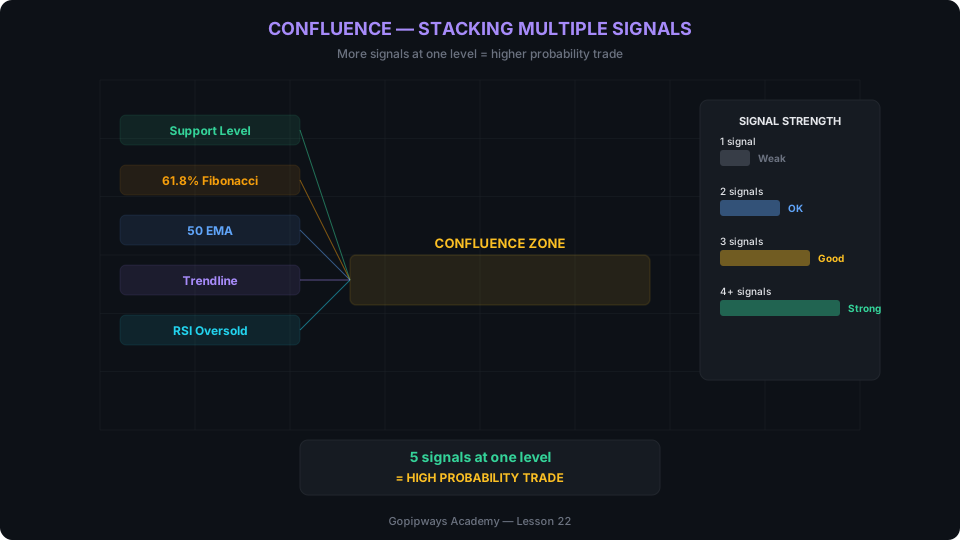
Imagine asking five independent witnesses to describe where an accident happened. If they all point to the same intersection, you are confident about the location. One witness? Maybe confused. Five? Almost certainly correct. Confluence in trading follows the same logic — when five independent factors all point to the same price level, the probability of a reaction there is far higher than if only one factor pointed to it.
Confluence trading is the practice of combining multiple independent technical signals at the same price level before entering a trade. Each additional confirming factor exponentially increases the probability that the level will hold and the trade will succeed.
What counts as confluence?
Strong independent confluence factors:
1. Key horizontal support/resistance — level tested 2+ times
2. Fibonacci level — 38.2%, 50%, or 61.8% retracement
3. Moving average — 20, 50, or 200 EMA aligned at the same price
4. Trendline — dynamic line intersecting the level
5. Candlestick pattern — bullish pin bar, engulfing, etc.
6. RSI divergence — bearish or bullish divergence at the level
7. MACD crossover — confirming the reversal direction
8. Round number — 1.1000, 1.0500, ₦50, ₦100 (psychologically significant)
Minimum standard: 3 independent factors before entering.
Building a confluence checklist
Before any entry, score the setup:
- Higher timeframe structure at this level? (+1)
- Fibonacci level here? (+1)
- Moving average confluent? (+1)
- Trendline passing through? (+1)
- Candle pattern at exact point? (+1)
- RSI or MACD divergence? (+1)
3 factors: standard entry. 5+ factors: consider full position size.
5-factor confluence trade on EUR/USD:
At 1.0850:
1. Major horizontal support (held 3 times) ✓
2. 61.8% Fibonacci retracement ✓
3. 50 EMA sitting at 1.0848 ✓
4. Uptrend trendline passing through 1.0845–1.0855 ✓
5. Bullish engulfing candle ✓
Entry: 1.0855 · Stop: 1.0815 (below all confluence) · Target: 1.0960
Risk: 40 pips · Reward: 105 pips · R:R: 1:2.6 · Conviction: Maximum.
NGX parallel: When ZENITH BANK hit ₦35 in a pullback: it was a 50% Fibonacci retracement of the annual swing, coincided with the 200-day moving average, sat at previous resistance-turned-support, and formed a weekly bullish hammer. Four confluence factors on a weekly chart. The subsequent move to ₦48 was one of the highest-conviction setups of the year for NGX equity traders.
Counting the same type of evidence twice. RSI at 30 AND stochastic at 20 is NOT two signals — both are momentum oscillators saying the same thing with different calculations. True confluence requires independent analytical methods: price structure, Fibonacci, moving average, momentum, candle pattern. Different methods, same conclusion.
Keep a physical or digital confluence scorecard for each trade idea. Write down every factor and its basis. If you cannot list 3 independent factors, do not enter. This forces honest pre-trade analysis and prevents entry on "feel" or pattern-matching alone.
Confluence trading stacks probability in your favour by requiring 3+ independent signals to align at the same price — turning ordinary setups into high-conviction entries with pre-defined risk and maximum edge.