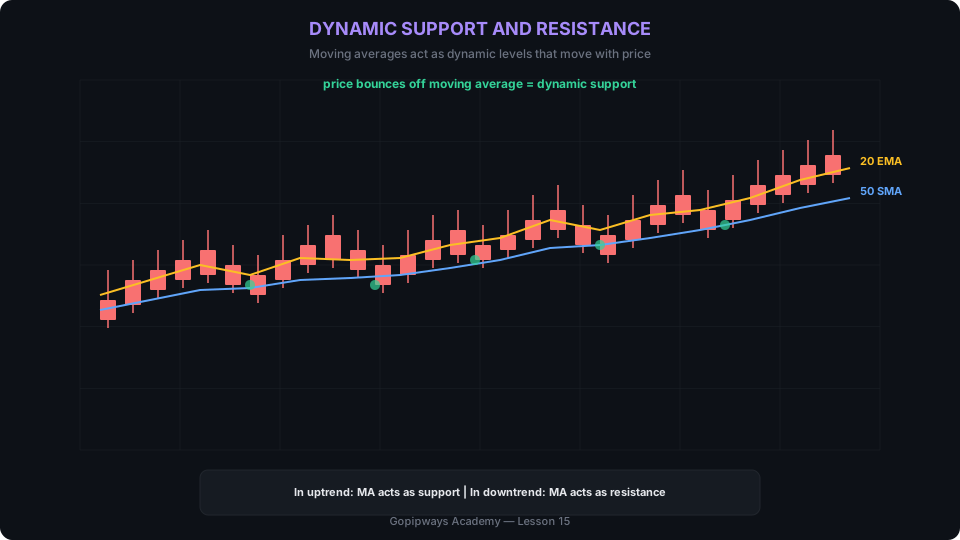
Static support and resistance levels are like signposts on a map — useful but fixed. Dynamic support and resistance is like a GPS — it follows price in real time, adjusting as the market moves. The best traders use both, and knowing when each applies is one of the marks of a genuinely advanced analyst.
Dynamic support and resistance are levels that move with price — primarily trendlines, channels, and moving averages. Unlike fixed horizontal levels, they capture the ongoing momentum of a trend and provide entry points throughout a directional move.
Trendlines
A valid trendline requires a minimum of two confirmed swing points to draw and a third touch to validate.
- Uptrend trendline: connect two or more Higher Lows. Price should bounce from this line on each test.
- Downtrend trendline: connect two or more Lower Highs. Price should reverse from it each time.
Rules: use candlestick bodies (not wicks) as primary anchor points. Steeper than 45° = unsustainable and will break sooner.
Price channels
When price moves between two parallel trendlines, you have a channel. Buy zones at the lower trendline, sell zones at the upper, measured-move targets after a break.
Moving averages as dynamic S&R
The 20 EMA acts as dynamic support in uptrends and resistance in downtrends. When price pulls back to touch the 20 EMA and bounces in a strong trend, that is the EMA acting as dynamic support — the same concept as a horizontal level, just moving.
Trendline bounce trade:
GBP/USD uptrend. Trendline connecting HL1 (1.2550) and HL2 (1.2620).
Price pulls back to trendline at 1.2680. Bullish pin bar forms.
Entry: 1.2685 · Stop: 1.2650 (below trendline + buffer) · Target: 1.2780 (previous HH)
Risk: 35 pips · Reward: 95 pips · R:R: 1:2.7
NGX parallel: OKOMU OIL PALM spent much of 2023 in a clear ascending channel. Each touch of the lower channel line (the trendline through Higher Lows) provided low-risk buy entries with the upper channel line as natural profit target. Channels on weekly NGX charts often hold for months, providing repeated opportunities on the same instrument.
Forcing trendlines to connect every wick rather than meaningful swing points. A line touching 8 wicks but missing 2 major body swing lows is not a real trendline — it is wishful pattern-matching. Draw clean lines through the clearest swing bodies, even if a few wicks pierce slightly.
When a trendline breaks, do not immediately trade the break in the new direction. Wait for a retest — price often returns to the broken trendline (now acting as resistance) before continuing. The retest entry gives you confirmation the break was real, a tight stop, and excellent R:R on the continuation move.
Dynamic S&R moves with the trend — trendlines connect swing lows in uptrends, and the 20 EMA bounce strategy lets you enter at pullbacks with structure and momentum on your side.