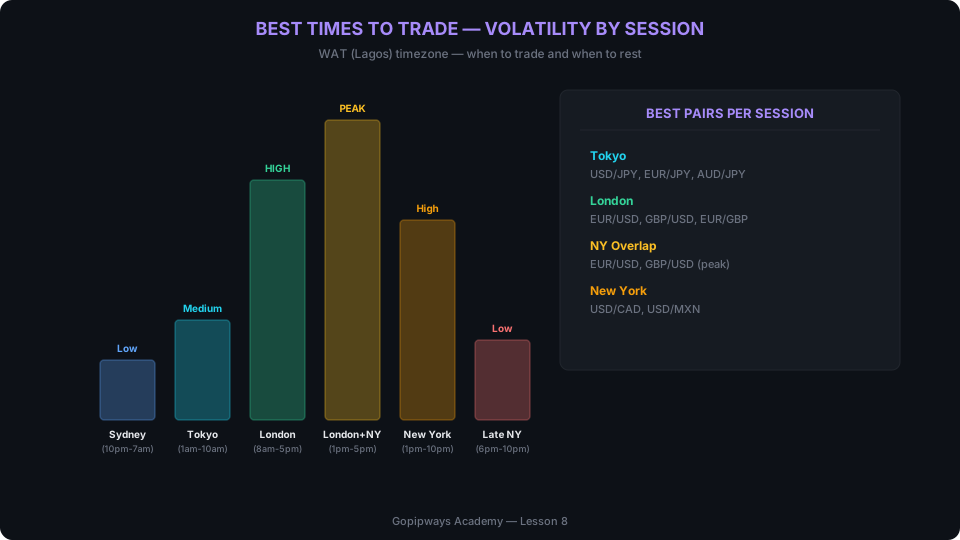
A surgeon does not schedule complex operations at 3am. A Lagos market trader does not set up their stall at midnight. Timing is a force multiplier on whatever skill you have. Two identical traders with identical strategies — one trading at the right time, one trading at random — will produce completely different results over a year.
Optimal trading times are windows when volume is high, spreads are tight, and price moves with enough momentum to reach targets before reversing — not the hours when you happen to be free.
The tier system for Forex timing
Tier 1 — Highest probability (trade your primary strategy here)
- London open: 9am–12pm WAT
- London-New York overlap: 2pm–6pm WAT
Tier 2 — Moderate (selective trades with proven setups only)
- New York session: 2pm–9pm WAT
- Tokyo-London handoff: 8am–10am WAT
Tier 3 — Avoid unless you have a specialist strategy
- Sydney session only: 11pm–1am WAT
- Early Tokyo: 1am–4am WAT
- Friday close and weekend: 9pm WAT onward
News events — the wildcard
High-impact news (NFP, Fed rate decisions, CBN MPC) can override all session rules. Spreads spike, slippage is extreme, price can move 100+ pips in seconds before reversing. Unless you have a specific news trading strategy: close positions or step aside 15 minutes before and after.
Sample Lagos-based trader schedule:
| Time (WAT) | Activity |
|---|---|
| 8:30am | Review overnight moves, mark key levels |
| 9:00am | London open — watch for setup triggers |
| 11:00am | Step away if no quality setup formed |
| 1:45pm | Pre-New York prep |
| 2:00pm | London-NY overlap — primary trading window |
| 5:30pm | Close day trades before London close |
| 6:30pm | Journal, plan next day |
Total screen time: ~4 hours. Outside this schedule: no trades.
NGX timing: The exchange closes 2:30pm WAT. Most active windows: 10am–12pm (open momentum) and 1:30pm–2:30pm (end-of-day institutional positioning). These are the Tier 1 windows for NGX stock traders. The rest of the day is noise for most retail participants.
Trading every hour the market is open because opportunity might appear. The Forex market is technically open 120 hours per week. The best setups appear in maybe 10–15 of those hours. Sitting in charts during dead zones produces boredom trades — low-probability entries taken from impatience, not analysis.
Use an economic calendar (Forex Factory or Investing.com) every morning. Mark that day's high-impact events. Block 15-minute no-trade zones around them. This single habit eliminates most of the news-slippage losses beginners suffer.
The best trading schedule focuses on 2–4 hours per day during the London open and London-New York overlap, with a strict no-trade rule around high-impact news events.